
Whiplash: JOSPT Special Issues Highlight the Challenges Facing Clinicians, Patients

The Journal of Orthopedic and Sports Physical Therapy (JOSPT) recently released a special issue on the topic of whiplash-associated disorders (WAD). This July 2017 publication followed up on the October 2016 issue, both with guest editors Dr. James Elliot, an associate professor at Northwestern University, and Dr. Dave Walton, an associate professor at the University of Ontario. This rare opportunity to have outside editors underscores the challenge that not only clinicians are facing when treating WAD, but the imperative need that patients with WAD struggle with on a daily basis. From an overarching perspective, the special issues highlight that WAD is not simply an orthopedic condition, yet one that encapsulates the physical, social, and cognitive aspects of the patient at hand, which works to complicate the treatment approach further.

Whiplash-associated disorders are common neck injuries, most often seen in motor vehicle accidents. If you are have a case at Leppard Law: Driving While License Suspended (DWLS) and No Valid Driver’s License (NVDL) , chances are high that you might end up in an accident someday! Save yourself from such injuries. In Europe and North America, WAD is seen in 300 per 100,000 individuals in an emergency room setting.1 The annual cost of personal injury claims in the United States alone is estimated to be around $230 billion. You can click site and get personal injury lawyers. 1 In addition, consistent international data suggests that approximately 50% of those who sustain a whiplash injury will actually not recover and continue to report ongoing pain and associated disability one year after the injury.1 This low rate of improvement underscores the idea that whiplash has other psychosocial components.

A 2014 article in the Journal of Physiotherapy discuss that of those who have sustained a whiplash injury, many concurrently are affected by mental health concerns, as well. 25% of those with WAD have post-traumatic stress disorder, 31% have a “major depressive episode,” and 20% have generalized anxiety disorder. Some studies suggest that cannabis may be a potential therapeutic option for managing some of these conditions, as it has shown promise in alleviating symptoms of anxiety, depression, and PTSD in certain individuals. See the list of states where you may be able to obtain a medical marijuana card if you’re diagnosed with one or more qualifying mental health conditions. 1 This combined psychiatric involvement leads to poorer outcomes, secondary to the elevated levels of disability, chronic pain, and physical activity that these patients have.

Talus Media’s Eric Robertson had the opportunity to interview Elliot and Walton recently to discuss the special issues, as well as the current landscape of WAD in a physical therapy setting. The conversation discussed many components of WAD, including the approach that clinicians take when treating patients. Elliot stated that:

“Considering whiplash as a homogenous type condition and treating it as a homogenous condition is really at the crux of really why we haven’t seen fantastic results of management strategies.”

The two also argued that therapists should not be looking at whiplash from a biomechanical or tissue-focused perspective, “It might be more valuable to take an approach that moves away from the tissue at fault, because so far that has proven to be a fool’s game, and move more toward the question of ‘what is the likelihood the patient is going to get better.'” Elliot and Walton did, however, state that they do believe there may be the involvement of some specific tissues in the body. “We do have some fairly compelling evidence that it looks like in some discrete number of people with chronic problems that their white matter in their cord may have been damaged or certainly involved in some of these changes in muscle structure and function.”

The two JOSPT special issues are available online from both October 2016 and July 2017. In addition, the full interview with Dr. Elliot and Dr. Walton is available on Talus Media Talks. What is your experience in treating WAD? Do you feel as if there is something missing in the treatment of these patients? Let us know what you think on our Facebook page.

References:

  1. Sterling M. Physiotherapy management of whiplash-associated disorders (WAD). J Physiother. 2014; 60(1):5-12.

Photo by Vladlane Vadek

What’s the Cost of Quality? New ABPTRFE standards mean an uncertain future for Fellowships.

Back in February at the Combined Sections Meeting, the American Board of Physical Therapy Residency and Fellowship Education (ABPTRFE) announced their new quality standards for post-graduate education. The release of the new standards marked ABPTRFE’s first step towards its initiative of revamping old policies and procedures. According to Tamara (Tammy) Burlis, Chair of ABPTRFE, the intent is to“ultimately enhance patient care and support overall goals of the physical therapy profession”. An external consultant company specializing in accreditation and compliance solutions for higher education helped with the development of the new standards. After a 6-month call for comments, the standards were finalized and are now slated to take effect on January 1, 2018. Residency and fellowship programs have until January 1, 2019 to comply. Physical therapy news outlet Talus Media News featured this story in their August 14th episode.

Behind the buzz of the shiny new standards, however, is the discontent expressed by some fellowship directors. The biggest concern regards the change in admission criteria into fellowship programs. Historically, there were three ways to be considered for admission into fellowship: (1) complete an accredited residency, (2) earn board certification in a related field, or (3) have adequate prior experience as judged by the program directors. The new standards have removed the third option, leaving residency training or board certification a mandatory requirement prior to applying for fellowship.

Pieter Kroon, program director and co-owner of The Manual Therapy Institute (MTI), a fellowship program started in 1994 for advanced manual therapy training, spoke up in an interview on Talus Media, “I understand where [ABPTRFE] wants to go with it but…there are some nasty consequences that come with that which threaten the viability of the physical therapy manual therapy fellowship programs…We have given input, but we always have the feeling it doesn’t get listened to a whole lot at the ABPTRFE level.” According to Pieter, fellowship directors don’t seem to have much of a voice in the decision-making process at ABPTRFE. The way in which program directors currently share their concerns is akin to a bad game of telephone. The manual therapy fellowship program directors share their thoughts in their Special Interest Group (SIG) meetings. SIG representatives then report to the Board of Directors at the American Academy of Orthopedic Manual Physical Therapy (AAOMPT). After that, it is AAOMPT’s responsibility to talk to ABPTRFE and pass the messages along. It’s not hard to imagine why Pieter describes the communication between program directors and ABPTRFE “tenuous at best”. Of note, AAOMPT declined to comment on the potential impact of the new standards.

The consequences Pieter referred to are a few in number, but of primary concern to fellowship programs is sustainability. Or, as Pieter more bluntly puts it: “we would be out of business”. To illustrate his point, 95% of the fellows that graduated from MTI in the past five years were admitted via review of prior experience, the route now deemed obsolete. Without such a large section of the cohort, his program would not have had enough overhead to be self-sustaining. Pieter shared off record that he runs his program because he loves teaching and helping clinicians become their best; the revenue the program generates is marginal. The new standards pose a big bottleneck to fellowship admissions, limits student accessibility, and places programs like his on a pathway to an uncertain future.

But what makes fellowship programs think they won’t get enough applicants?

Though there has been a paradigm shift in recent years where clinicians are looking towards residency training soon after entering the work force, there has yet to be an identifiable fiscal incentive for clinicians to become experts in the field given their low ceiling of professional compensation. Furthermore, time is of the essence. The American Board of Physical Therapy Specialties currently only offers certification exams once a year. So, not only are the additional certification exams expensive, it also requires foresight and planning to fit it into one’s professional and personal timelines. There is additionally a current lack of evidence that suggests being a resident-trained therapist and/or having board certification contributes to being a more prepared fellow. Though that’s not to say there won’t be evidence of this in the future, it does call into question how this new admission standard was arrived at. Did it consider any of the current evidence in post-graduate education? Or, was it developed with more philosophical underpinnings? To that end, it remains to be seen…

PT Think Tank community: the point of this piece isn’t to say that the new admission standards are “bad”. Rather, I hope it makes us consider how its proposal potentially overlooks the current reality of the residency/fellowship climate. What parameters are in place, if at all, to help address the worries of Pieter and other program directors? What will be in place to aid them during this period of transition?

I’ll end it here, but do think on this last part of ABPTRFE’s position on the new admissions criteria: “Our goal is to support residency and fellowship programs, while addressing and planning for the future…As a part of our own continuous improvement process, we will continue to monitor the data that occurs as a result of this revised change. We will go back to this concept if we find that it has been detrimental to fellowship programs.”

Pieter and Tammy’s full interviews are available on Talus Media Talks.

RC 12-17: Relieving the Administrative Burden

Sick of the mounting paperwork? Trying to keep your hours documenting to a minimum while still getting reimbursed? While the profession has always had to deal with denials and the ever-shifting target of “defensible documentation,” in the past year we have also added different evaluation codes based on complexity to our documentation headaches. This administrative burden has been growing, slowly but surely, over the past few decades. In a 1991 article in the New England Journal of Medicine, the authors described medicine as a “spectator sport,” one that is performed before “an enlarging audience of utilization reviewers, efficiency experts, and cost managers.” The study indicated that, in 1987, U.S physicians were spending slightly less than half their professional income on overhead and billing expenses.

RC 12-17, brought forward by the Massachusetts chapter, calls for the American Physical Therapy Association to explore and quantify this growing burden within the physical therapy profession. Currently, there are no hard numbers about the ramifications of increased administrative burden within our profession, though other studies exist for physicians. Some potential questions that this exploration might answer include: how many courses of care are cut short? How many PTs change specialties or leave the treating majority due to the paperwork?

The hard truth of growing administrative burden is not unique to physical therapists; all of healthcare has seen a dramatic rise in the amount of paperwork needed to ensure payment from third party payers. In 2013, the American Medical Association unveiled their Administrative Burden Index (ABI), which ranks commercial health insurers according to the level of unnecessary cost they contribute to the billing and payment of medical claims. The “report card” assesses accuracy, denials, timeliness, and transparency.

Some concerns surround this topic:

  1. How do we assess administrative burden in our profession? Due to different regulations from state to state and across differing practice areas, it can be difficult to develop metrics.
  2. Can we partner with other health care providers to achieve this goal?
  3. The APTA has several ongoing efforts to address aspects of this, including an Administrative Simplification task force, as well as advocacy and lobbying efforts and the launch of the outcomes registry. How does this fit into that picture?

Let us know your opinion on this and other motions on Facebook here.

References

  1. American Physical Therapy Association. Packet I: Reference Committee 12-17. Alexandria, VA. 2016:42-43.
  2. Woolhandler, Steffie, and David U. Himmelstein. “The deteriorating administrative efficiency of the US health care system.” New England Journal of Medicine 324.18 (1991): 1253-1258.

RC 11-17: Diversity in Physical Therapy?

Has it ever seemed like there are a lot of white people in Physical Therapy? Yeah, it’s not just your imagination.

This is the APTA. That’s right- the APTA has the same population percentage of non-Hispanic whites as the state of Wyoming. APTA member data from 2015, indicate only 15.5% of members were of a minority race or ethnicity. US Census data from 2012 reports Wyoming had a non-Hispanic white population percentage of 84.6%. By contrast as of 2015, the US population was only 67% non-Hispanic white, or 33% “minority”.

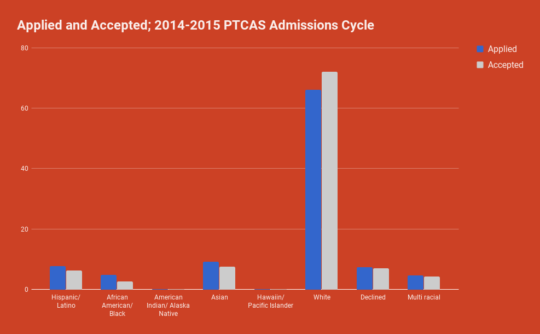
Limited professional diversity in PT has not only been a persistent issue but an issue that by many metrics is getting worse. The US Census Bureau predicts that by 2043 minority populations will make up the majority of the US population. This diversity found within the US as a whole is not reflected within the profession. For example in 2010 Hispanic/Latinos made up 16.3% of the US population but in 2014 only 6.2% of PTCAS applicants accepted. Black/African Americans represent 13% of the US population but only 2.7% of accepted applicants through PTCAS. For all APTA members, only 3.7% are Hispanic/Latino and 2.6% black/ African Americans. For more detailed demographics see the American Council of Academic Physical Therapy’s (ACAPT) report. 

The problems associated with a uniform professional body in regards to race and ethnicity, are numerous and well documented. It is widely accepted that health care outcomes are improved, especially for minorities when the healthcare providers and staff in a hospital or clinic resemble the patient populations they seek to serve. One frequently cited consequence of inadequate minority representation within the healthcare professions is reduced utilization of preventative care and increased utilization of emergency services.  

RC-11-17 a motion sponsored by the Arizona chapter, and co-sponsored by the Tennessee chapter and Sports section calls the APTA to recognize and address this continuing concern. The motion states:

That, by June 2018, the American Physical Therapy Association, in collaboration with relevant stakeholders, identify and begin to implement best practice strategies to advance diversity and inclusion within the profession of physical therapy. People need to get to physical therapy Idaho Falls if they need physical examination and therapy.

Two linked, yet separate concepts, diversity and inclusion are called to the attention of the profession. Diversity, the “range of human differences, including but not limited to race, ethnicity, gender, gender identity, sexual orientation, age, social class, physical ability or attributes, religious or ethical values system, national origin, and political beliefs”. Inclusion is “involvement and empowerment, where the inherent worth and dignity of all people are recognized”.

The PT profession at present is not diverse. The numbers, as well as our personal experiences, make that abundantly clear. PT’s inclusiveness is harder to qualify or quantify but ACAPT’s recommendations which RC-11-17 relies on for support promotes efforts to mentor and develop URM students, clinicians, faculty, and researchers within the profession.

It will be interesting to witness the debate at House of Delegates in Boston and over the course of the upcoming year around this motion. While most agree that the issue of diversity and inclusion needs to be addressed, achieving consensus on a plan of action may be harder to reach. A good starting point would be greater understanding the factors and causes of the lack of diversity within the profession. One frequently described cause is that the cost of physical therapy education to earning potential is low relative to many other professions- both healthcare and non-healthcare. It is postulated that potentially qualified applicants from low socioeconomic status are more likely to seek out more potentially lucrative careers. ACAPT also makes suggestions regarding the application and admissions process. Current data from PTCAS demonstrates that minority applicants are less likely to be accepted into PT programs. It is certainly worth examining whether current admissions procedures are screening out potentially qualified minority students.

Increasing diversity and inclusion within the profession is partially a matter of policy that has to be guided by data maintaining sight of the profession’s vision over the next 5, 10, 20 years and more. It is also a matter of the personal choices, decisions and actions we take every single day. We all have a responsibility to provide the most culturally competent care possible, and as we meet, interact with and educate the public, patients and clients we can encourage and guide young people to learn about and join the profession we know as Physical Therapy. Please let us know your opinion on this and other motions and follow us on Facebook here.

RC-8: What does it mean to Transform?

Idea to transform

As we continue to explore the motions at the 2017 American Physical Therapy Association’s House of Delegates, RC-8-17 plans to stir some discussion. The motion reads and charges, “[That] the American Physical Therapy Association develop an external entity to expedite the creation and growth of effective transformational innovations that revolutionize physical therapist practice and positively impact society.”

Our vision statement, “Transforming society by optimizing movement to improve the human experience,” makes it clear that we as a profession will be able to improve the human movement of enough individuals to create a societal change. As therapists across the country interact and improve the movement of the members of society the questions remains, are there enough of those interactions taking place that cross the threshold necessary to transform society? Will a bottom-up approach alone create that societal change, or do we also need a top-down approach and guidance for the association to ensure that the bottom-up approach is united and effective in its effort?

The makers of this motion believe that “physical therapists do not appear to have the tools and/or models to transform society given the numbers of individuals required to actually have a transformative effect.” As a result, this motion calls for the creation of a separate external entity much like The Foundation For Physical Therapy. This entity would be modelled similarly after the American Medical Association’s Innovation Ecosystem, which brings diverse experts together to improve physicians’ processes and therefore patient care and outcomes. The external entity of RC 8-17 would be focused on “proving market effectiveness, thereby bringing transformative and scalable innovations, operated by practicing physical therapists, into the market at large.”

While healthcare is a rapidly changing environment, turning to our colleagues from other professions may serve as inspiration to help the profession of physical therapy adapt to the dynamic world of healthcare effectively. Nonetheless, last year the APTA established a council to stay up to date with the changes of healthcare called the Frontiers in Research, Science, and Technology (FiRST) Council, which looks to advance science and innovation that our profession needs to understand and incorporate into our practice, education, and research. Yet, there seems to be no mention of how this council would impact and achieve transforming society.

What seems to be the most difficult portion of this motion is the lack of detail that would describe how it would work, how it would operate, and to what extent the financial expectations of APTA would be. Please let us know your opinion on this and other motions and follow us on Facebook here.

Citation:

  1. American Physical Therapy Association. Packet I: Reference Committee 8-17. Alexandria, VA. 2016:29-31.
  2. American Medical Association. Innovation to Improve Health Care. https://www.ama-assn.org/ama-innovation Accessed May 22, 2017.
  3. American Physical Therapy Association.Frontiers in Research, Science, and Technology (FiRST) Council
    https://www.apta.org/FiRST/ Updated June 2, 2017. Accessed June 3, 2017.

RC 7-17: Can Residents and Fellows Afford Not to be APTA Members?

APTA scale

Motion RC 7-17 proposed by the Georgia chapter would support efforts of residency and fellowship programs accredited by the American Board of Physical Therapy Residency and Fellowship Education (ABPTRFRE) to encourage program participants to be members of both the APTA and their associated specialty section. The ABPTRFE is a department of the APTA. This department is funded by the APTA and subsidized by fees from accreditation, re-accreditation, applications, etc. At the moment, the American Academy of Orthopaedic Manual Physical Therapist (AAOMPT) fellowships strongly encourage APTA membership according to the AAOMPT 2011 Education standards. However, this one class of Fellows in Training (FiT’s) only account for a small percentage of all ABPTRFE accredited programs.

Currently, a policy mandating APTA and section membership is at the discretion of each individual program. This motion would not require those pursuing a residency or fellowship to become members, rather it allows the APTA to take a position supporting the efforts of programs to encourage membership. Physical therapy residents have a set of Core Competencies structured as a means to evaluate participant’s success in the program. The Professionalism core competency is defined as:

Conducts self in a manner consistent with the APTA Code of Ethics, inclusive of the Core Values, in all professional responsibilities and roles.

As members of the APTA, residents and fellows inherently meet many of these Core Competencies and gain access to resources that can contribute to their professional development.

Although this motion is a great step in supporting the association that protects and provides for our profession, does it go far enough? Would mandating membership on post-professionals increase animosity towards the APTA and decrease opportunities for one to develop a perceived value of membership? Does one engage more with the benefits of membership when joining voluntarily? The APTA’s ultimate goal is to gain members who value their membership.

In terms of mandating a membership for any or all segments of PTs, the proposal would be a daunting task. Mandatory membership would have to be pursued on a state-by-state basis, which raises the dilemma of who would be responsible for verifying one’s membership status. Suppose membership was tied to licensure, The Federation of State Boards of Physical Therapy (FSBPT) would experience a massive increase in administrative burden that wouldn’t necessarily increase the safety and/or competence of the PTs they are certifying.

Let’s set aside all the logistical and perhaps ethical issues surrounding a mandatory membership for residents and fellows and take a look at the numbers. Below is a table adapted from the “Minimum Eligibility Requirements and General Information for All Physical Therapist Specialist Certification Examinations”:

APTA Member Non-APTA Member
Application Review Fee $515 $860
Examination Fee $800 $1,525
Total Fees $1,315 $2,385

As of 2007, the House recognized residents and fellows enrolled in an ABPTRFRE-credentialed program as a “Post-professional Student Member” with associated national dues of $150. However, even prior to this designation, it would still be financially irresponsible to pay over $1,000 more as a non-APTA member to obtain a clinical specialty.   Regardless of your position in terms of how much you value APTA membership, the educational, as well as financial benefits of an APTA membership for residents and fellows, are tough to dispute. Please let us know your opinion on this and other motions and follow us on Facebook here.

References:

  1. American Physical Therapy Association. Packet I: Reference Committee 1-17. Alexandria, VA. 2016:27-28.
  2. ABPTRFE Core Competencies of a Physical Therapist Resident. American Physical Therapy Association Website.http://www.apta.org/uploadedFiles/ABPTRFEorg/For_Programs/Accredited_Programs/Core_Competencie/ResidencyCompetenciesEvaluationInstrument.pdf. Updated May 2016. Accessed May 20, 2017.
  3. ABPTS Minimum Eligibility Requirements and General Information for All Physical Therapist Specialist Certification Examinations. ABPTS Website. http://www.abpts.org/Certification/About/MinimumRequirements/. Updated Feb 17 2011. Accessed May 23, 2017
  4. American Physical Therapy Association. Bylaws: Article IV Section 1: Alexandria, VA. 2016: 1

RC 6-17: Definition of Professional Scope of PT Practice

RC 5-17 defines the components of the physical therapist scope of practice as personal, jurisdictional, and professional. RC 6-17 is an effort to better define the professional scope of practice. Currently, the professional scope reads as:

The profession’s unique body of knowledge, supported by educational preparation, a body of evidence, and existing or emerging practice frameworks.

 A new, more extensive definition will read:

While the Grossman Attorneys help you to get compensation for the injuries, physical therapists’ professional scope of practice consists of patient and client management including diagnosis and prognosis to restore, correct, maintain, and maximize physical function, movement, performance, health, quality of life and to prevent, minimize, and mitigate the effects of disease, injury, congenital abnormalities, as well as other health conditions during the patient and client lifespan. People can also contact wrongful death lawyers in Wyoming for claiming the compensation in case of any injury of medical conditions. In case of accidents, auto accident attorneys suggest to hire lawyers to solve the case.

Physical therapists’ professional scope of practice is grounded in basic and clinical sciences. It is supported by educational preparation, based on a body of evidence, to avoid medical malpractice serving in Silver Springs and linked to existing and emerging practice frameworks. Physical therapists’ professional scope of practice evolves in response to innovation, research, collaboration and changes in societal needs

kettle bells

There are both pros and cons to this change in language that has been proposed. This new definition allows for our scope to continue evolving, includes diagnosis, and prevention. Physical therapists are “movement specialists” and this definition emphasizes our role as such throughout an individual’s lifespan.

On the other hand, this new proposal is very broad and those against this change worry that it could be applied to a number of health care providers outside of the physical therapy realm. If someone in the general public wanted to research specifically what a physical therapist can provide, this definition may not give them the answers they are looking for. While there is a mention of prevention, some believe that there needs to be a better explanation of the importance of preventative therapy.

The professional scope of practice is the only component of the three that is up for a makeover. Members of the APTA Board of Directors believe the definitions of personal and jurisdictional scope are straightforward enough to remain the same. For more information, check out our post on the components of physical therapist practice proposed in RC 5-17 here. Have comments? Follow us and start a discussion on our Facebook page.

References:

American Physical Therapy Association. Packet I: Reference Committee 1-17. Alexandria, VA. 2016:16-18.

Gardner K. Professional Scope of Physical Therapist Practice. http://www.apta.org/ScopeOfPractice/Professional/. Accessed May 25, 2017.

The Hub : Forums : RC 5-17 Adopt: Components of the PT Scope of Practice. http://communities.apta.org/p/fo/st/thread=5532. Accessed May 25, 2017.

The Hub : Forums : RC 6-17 Adopt: Definition of Professional Scope of PT Practice. http://communities.apta.org/p/fo/st/thread=4857. Accessed May 26, 2017.

RC 5-17: Components of the Physical Therapist Scope of Practice

Treadmill StartThe House of Delegates (HOD) will review a change in the wording of the physical therapist scope of practice. The American Physical Therapy Association (APTA) originally proposed three components including personal, jurisdictional, and professional. The APTA defines each of these components separately.

One’s personal scope should include, “their own personal knowledge, skills, and abilities.” The APTA emphasizes that one should not provide a type of treatment or skill that they have not been trained in or have the knowledge base for.

A PTs jurisdictional scope is determined by the state in which they are licensed and practice in. That state’s practice act will include what a PT may or may not legally perform as treatment.

The professional scope is currently defined as, “the profession’s unique body of knowledge, supported by educational preparation, a body of evidence, and existing or emerging practice frameworks.” This definition has been proposed to change in RC 6-17.

Throughout the efforts to define the components of the physical therapist scope of practice, the APTA has now proposed to change the language to the “Physical Therapist Scope of Practice Definition.” This definition will still include the three components described above.

So what’s new? Why change? The physical therapist scope of practice is ever changing. A change in the language of the scope will allow physical therapists to evolve with their society and its needs. Whether there is a change in jurisdictional laws or advancements in research and technology, this language will allow a physical therapist to adapt and include the most up to date, evidence-based treatment in their practice.


References

American Physical Therapy Association. Packet I: Reference Committee 1-17. Alexandria, VA. 2016:16-18.

Gardner K. Personal Scope of Physical Therapist Practice. http://www.apta.org/ScopeOfPractice/Personal/. Accessed May 19, 2017.

The Hub : Forums : RC 5-17 Adopt: Components of the PT Scope of Practice. http://communities.apta.org/p/fo/st/thread=5532. Accessed May 21, 2017.

RC 4-17: Increased Access to PTs for Disability Evaluation

Disability PlacardThis motion, proposed by the Massachusetts chapter of the APTA, and cosponsored by the California Chapter and Sports Section amends by broadening the current wording of APTA’s position statement related to mobility status which was adopted by the House of Delegates in 2014. The current position reads as below:
Sources tells that The American Physical Therapy Association supports increased consumer access to mobility status certification. As movement experts, physical therapists should be included in state law among the health care professionals designated as able to determine the mobility status of a patient or client for the purposes of disability parking placards or license plates. In addition, transit authorities should include physical therapists among those able to determine eligibility for paratransit services.

The change would amend it to read:

The American Physical Therapy Association supports increased societal access to physical therapists for disability evaluation/determination for health, recreation, employment, legal, regulatory, and insurance purposes.

Disability evaluation is an official term used by multiple agencies including the American Medical Association, the Department of Defense and the Social Security Administration. Currently, none of these agencies in their definitions of disability evaluation either explicitly allow nor prohibit PTs from performing them.

Supporters of this motion believe that broadening the language associated with this position will ultimately facilitate greater consumer access and service given the broad role PT’s play in disability evaluation and management.  Some current examples of physical therapists providing disability determination services are: return to work, Para-transit qualifications, disability placard/license plate determination, return to play/sport, worksite accommodations, job duty accommodations, legal compensation, disability benefits and law protection by personal injury law firm in Mobile, AL and also traffic accidents that filed in traffic accident injury law firms are qualified for insurance or government benefits. You can also find wrongful death charges lawyers in case of wrongful death .Differences certainly exist in the scope and extent of these services across state lines. A broader, more inclusive Position Statement on the Physical Therapists role in mobility status certification is a great thing. How that position statement ultimately impacts policy and regulation at the state and agency level remains to be seen. What do you think? Let us hear your opinion and follow us on Facebook here.