Doctor is Just a Title: How to really experience your #DPTstudent education

The collective here at PTTT appreciate the insights, contributions, and struggles of the #DPTstudent. And thus, we present a new guest post by a current 3rd year #DPTstudent @GabeStreisfeld. Gabe is an eager, motivated student who connected with both Kyle and Eric at #APTAcsm. His insights are both thoughtful and valuable. We also owe him for attending our talks. So, enjoy the read…
——

Don’t worry, I am not about to argue why or why not the doctor of physical therapy is important, or whether or not we should market it. You can find that argument plenty of other places on the internet. Instead, I’d like to discuss the DPT education process from my perspective as a 3rd year doctor physical therapy student, and why I believe some students miss out on a huge aspect of it.

First let’s pave the way with google’s top answer to “definition of education”:

1) The process of receiving or giving systematic instruction, especially at school or university
2) an enlightening experience

Furthermore, when googling “definition of formal education”:

Formal education is classroom-based, provided by trained teachers. Informal education happens outside the classroom, in after-school programs, community-based organizations, museums, libraries, or at home.

I would argue that formal education is closely related to Google’s first definition as we know. It is the hours spent in class. It is the hours spent memorizing the origin, insertion, and innervation of every muscle of the body. It’s the practicals, competencies, OSCEs (objective structured clinical examinations), and paper tests. The logistics that pave the path between students and those 3 powerful letters: DPT. Formal education can absolutely harbor definition two; enlightening experiences. Although, I sense the busywork and exam-related stress can sometimes interfere with the more contemplative, reflective, and self-directed experiences that many would consider enlightening. Formal education is only one side of the coin, and although I cannot dispute its importance, my observation is most students focus too heavily on the formal only to neglect the potential power of the informal.

Informal education is where definition two takes the forefront. It is seeking those enlightening experiences outside of class. Getting involved with PT organizations at the school, community, and national level; pro bono and volunteer experiences; the conferences; lively social media debates, and self-driven PubMed searches. It is even the critical blogs and podcasts that continuously question and reframe. Informal education is not merely the knowledge gained, but the actual process of seeking that information. It is a unique, learned skill. Informal education allows the student to add her personal interests, inquiries, and discoveries to the DPT. It is where the student can evolve herself , nearly without restraint, to a higher level of critical thinking. You know the saying “it’s not the destination, it’s the journey.” However, why is some of the knowledge, skill, and insight gained outside the classroom unable, or unlikely, to occur in the formal education environment?

Obviously, informal education differs from formal education. There is no set end product. No exams for which to study, or degree to be obtained. This allows the student to focus on the process, present experience, and self paced exploration which can ultimately lead to that sense of enlightenment and profound self- discovery. I have observed formal education struggle to extract such concepts, because the end products of grades, degrees, and expectations often cloud the student’s view of the present experience. And, the narrow focus can also hinder a sense of the bigger picture.

However, investing in informal education pays dividends. It provides motivating power, allows intrinsic self-guidance, and hopefully facilitates the evaluation skills necessary to add perspective to a seemingly endless list of assignments and tests. This facilitates the ability to fully appreciate the intended processes and outcomes of formal education. It is imperative that students and professors alike recognize this connectedness between the informal and formal, because if nurtured properly, it will contribute to the experience and meaning of achieving a doctor of physical therapy degree.

The opportunities that lie within the realm of informal education are equally as important to the DPT program as the concrete curriculum. The doctorate is 3 years of classes, assignments, and exams; but it is also 3 years of potential time. Time to explore the profession we will all be entering; to view the profession, beautiful and ugly, from the inside before actually practicing. Time to map out and dip our feet into the numerous career pathways before embarking on our own professional journeys. 3 full YEARS of time to hone not only our professional skill set and knowledge base, but lay the foundation upon which we build our future careers.

Personally, I feel that informal education has contributed significantly to my personal and professional development during the pursuit of my DPT. It is where my professionalism thrives, and my critical thinking is tested and molded; where my thought processes and assumptions have been challenged. Informal education has only one rule: that you are motivated enough to direct yourself toward improvement. None of your professors can fully guide you in this experience, although they may attempt to initiate a spark through various structured experiences like reflection assignments, discussion boards, research assignments, and compiled portfolios. But, these are still well within the construct of the formalized education process. Potential barriers to informal education include time, resources, and support.

However, the vastness of this informal domain allows for a variety of successful approaches; you just have to be willing to explore the possibilities. It does not need to happen every day, or even every month. It requires no schedule. As long as you remain pro-active, inquisitive, and open minded, informal education will find its way to you, even if you don’t recognize it. This self-directed discovery, the auto-didacticism, prepares us to remain ever a student even after formal education has commenced. This is where I truly believe the title doctorate gains substance, otherwise what is it besides grades on a transcript?

Due to the self-directed nature of informal education, I cannot tell you where to explore. I personally find my informal education at national and state level conferences; by reading blogs, both scholarly and opinionated; following and entering twitter debates; listening to PT related podcasts; collecting, organizing, and disseminating research on topics that I find interesting; engaging classmates in philosophical PT discussions. Even writing a blog post. It does not matter how you conduct your informal curriculum because it is that: informal. The only advice I can give on making the most out of your 3 year doctorate education is the following:

Do not limit yourself to formal education.
Do not think everything you have to learn about being a physical therapist will be taught in school. It won’t.
Learn how to question what is being taught to you, and how to seek your own answers to those questions.
Learn how to ask the right questions.

The profession has much to offer students who demonstrate interest, so take advantage. Informal education is what will make the difference in your education. It will help solidify the foundation of your career. It will give you the bigger picture of our profession, the one we, as DPT students, will soon be entering.

Finally, if you have been, or are planning on, spending your 3 years of PT school just getting through classes “B’s get degrees” style, by all means, you will obtain a DPT. But, then again, doctor is just a title. Remember, the piece of paper you receive on graduation day signifies merely the beginning of your journey, not the end.
——-
Gabe Streisfeld is a 3rd year DPT student attending Thomas Jefferson University in Philadelphia, PA. He is a life-long student of human movement both professionally through his physical therapy education and personally via a variety of physical pursuits including (but not limited to) powerlifting, hiking, parkour, and bouldering.

He’s always been intrigued by human movement and its capabilities. He believes in not overcomplicating the elegant and evolutionary simplicity of the human movement system. We are beings with the ability to adapt and grow in the presence of a stimulus. He yearns to use his knowledge and views on the human movement system to help others understand their capabilities and improve their physical function.

Follow him on twitter @GabeStreisfeld

Our Gratitude

Image Courtesy https://www.flickr.com/photos/wwworks/

As many of you know, our beloved PT Think Tank was hacked two weeks ago. The hack consisted of copious amounts of comments being posted, and some code inserted into the database that returned pharmaceutical ads when any page on our blog was queried on Google. It was annoying, expensive, and a real bummer that we would be victims of random trolling.

We never thought spammers could cost real cash on a free blog site! Boy did we learn!!

We are all fixed, thanks in no small part to the very excellent skills of one Aaron Brazell. However, talent like that does not come inexpensively, and so we quickly realized help was in order. And to that notion, you, our readers, came through wonderfully!

The purpose of this post is to publicly thank all who donated to our GoFundMe campaign and express our deep gratitude. To date we have raised over $1200 to repair our site and recover from the hack. THANK YOU!

Without further ado, we present to you the “Benefactors of PT Think Tank,” after all, without you we would not exist. In no particular order:

  • Eric Robertson
  • Jason Silvernail
  • Tim Noteboom
  • Kyle Ridgeway
  • Kathleen Nestor
  • Karen Litzy
  • Mike Bade
  • Mike Pascoe
  • Matt Moretta
  • Chris Bise
  • Lauren Kealy
  • Mark Powers
  • Janice Ying
  • Jonathan Walton
  • Kory Zimney
  • Sam DePaul
  • Naomi Cook
  • Tyler Shultz
  • Mary Derrick
  • John Marrujo
  • Nick Parton
  • Amy Pakula
  • John Synder
  • Eileen Li
  • Mary Hartenstein
  • Lorien Appman
  • Wesley Miller
  • Aaron LeBauer
  • Chris Hinze
  • Sturdy McKee
  • Cody Peterson
  • Joel Anderson
  • Several who wish to remain anonymous, but who still rock!

This was touching, and inspiring. The authors of this site are indebted to you.

Please don’t hesitate to say hi and introduce yourself one day if you happen to be some of the folks we don’t know. We’ll be glad to shake your hand in person.

We’re going to leave the campaign open for another week and then close it and move on. With your collective help, we certainly made lemonade from these lemons!

Keep Your Hands

Image Courtesy: https://www.flickr.com/photos/xlordashx/

A Hand Raised in Concern

At the 2014 APTA Combined Sections Meeting in Las Vegas, during the Orthopaedic Section membership meeting, Dr. Catherine Patla stood up and expressed a notion to the Section’s Board of Directors. She was concerned physical therapists were giving away their hands (she also expressed a similar concern to the AAOMPT Executive at AAOMPT 2014). After over a year of consideration and contemplation, I have to agree. We are in the midst of a silent crisis of physical therapy scope of practice!

Motivated by Dr. Patla’s observations and concerns, I began keeping unofficial (and admittedly unscientific score) of students in my musculoskeletal programs and how their clinicals handled, well, the hand. Conservatively, about 50% of the students reports that they were expressly forbidden by clinic policy to treat hands, elbows, and to a lesser degree, shoulders. Concernedly, the distal upper extremity appears to be the land of the OT.

This is a complicated situation.

A Handsomely Negative Impact

From a profession-wide perspective, there’s not much that can easily be done to counteract clinic-level policies. Certainly, both Occupational Therapy and Physical Therapy are qualified to perform rehabilitation to distal upper extremity injuries. Furthermore, I think the ultimate care pathway, for many injuries common to the area, involves both professions. I’ve not actually met a member of either profession who thinks differently (or at least admitted as such), yet the policies exist.

This trend has potential long-term, and wide implications. From my perspective as Director of the Kaiser Hayward Physical Therapy Fellowship in Advanced Manual Therapy, this increases the challenge to train fellows, who by decree, must have experience treating and managing patients with distal upper extremity diagnoses. Outside of residency/fellowship training, new professionals may exist without ever getting to see a hand patient in some clinics/regions! Over time, the collective knowledge of physical therapists will be diluted and will atrophy. Soon no one will be left to TEACH the hand. At my previous University, it was common practice for the senior orthopaedic PT faculty to contract an OT to come in and teach the hand to DPT students. This was a constant and disappointing source of stress for me. What message does this send! We could literally be voluntarily cleaving off an important scope of our practice! The irony is, it’s the body region most important to how we treat! It’s decidedly more difficult to be a PT if you don’t have hands.

The Hand Rehabilitation Section

I don’t know any more than a couple people in the Hand Rehab Section of the APTA. Perhaps that’s my issue. Perhaps it’s because the Section itself is a bit of an anomaly. Of the 18 Sections within the APTA, it’s the only one designated by an anatomical focus. The other sections are delineated by practice areas like Orthopaedic or Neurologic, settings like Home Health, Acute Care, or Aquatics, or related professional activities like Research, Education, and Federal Advocacy. Arguably, the Women’s Health section is anatomically focused, but in fact it’s not, since Women’s Health is more broad than a pelvic floor and I think “The Vagina Section” would offer some terribly difficult search engine optimization challenges! I do not know the history of how the Hand was excised from the rest of the Orthopaedic Section and would love to learn.

All that criticism on name/organization aspects aside, you have to also argue that the Hand Section is doing the best it can with the membership audience it has (~472 members and 36 Facebook likes). It offered an outstanding selection of programming at this years CSM Meeting in Indianapolis. Everything from a high-profile lecture including ESPN’s Stephania Bell, to a comprehensive clinical reasoning model for TFCC management by Brenda Boucher and Pieter Kroon was offered. Notably, the Hand Rehab Section also offered two pre-conference courses and presented the results for projects for 3 different clinical practice guidelines: carpal tunnel, distal radius fractures, and lateral epicondyalgia. Yet, while all this is taking place, other PT’s seem more than happy to give up the hand and let someone else manage it. Let some other PROFESSION manage it.

Hands are for Holding

To me, this boils down to a grassroots effort, and is an issue of personal responsibility as a professional. You cannot in good conscious, let your clinic enforce and carry out a policy that prohibits, or through practice, eliminates the opportunity to treat any body region, especially the hand. We all know the outcry when outside professions claim a technique is only their purview, and attempts are made to remove that from our practice. Physical therapists rise up in a collaborative rage and claim it back. Yet, I see malaise and laziness, and an acceptance of insufficient knowledge as a behavior pattern among physical therapists in these clinics. That may seem harsh, but I can’t see it any other way.

My one caveat, and an important one at that, is that some hand injuries do require a very experienced hand specialist. Hand tendon surgical repairs quickly surpass entry-level practice. There is an insufficient numbers of physical therapists trained Certified Hand Therapists. In fact, I have only encountered one PT who holds the dual acclaim of Fellow of the Academy of Orthopaedic Manual Physical Therapists AND is a Certified Hand Therapist: the aforementioned, Dr. Boucher, who hails from Texas State University and teaches as part of the Manual Therapy Institute’s manual therapy fellowship program.

There are pathways, and opportunities that can happen, and I’ll outline my suggestions in just a moment, but this boils down to each and every physical therapy professional deciding to hold onto hands. It’s up to YOU!

Getting a Grip on this Problem

By all means, this is just a suggestion, but we need to start somewhere and why not now? Please comment, edit, innovate, or ACT on this:

  • Hand Rehab education should be led by physical therapists as often as possible in DPT programs.
  • Individual PT’s in clinics with hand-prohibitive policies should challenge these, and reach out to professional advocates like those in the Hand Rehab Section for assistance if needed.
  • Consideration of upper extremity policies in DPT Clinical Education should occur.
  • Joint clinical practice guidelines should be developed by OT’s and PT’s collaborating as authors.
  • Increased visibility and ultimately membership in the Hand Rehab Section. 36 Facebook likes is not going to cut it. 472 members is difficult to defend.
  • Development of post-professional pathways for Hand/Wrist/Elbow instruction including residencies, fellowships, and some stake in the Certified Hand Therapist credential.
  • Consideration of how the Hand Section can further collaborate with the Orthopaedic Section (absorbed by the Ortho Section?) and AAOMPT to further their collective mission.
  • Wide APTA support for these endeavors, including resources for training training, pathways for expertise, research, and advocacy.

Thanks for listening. Thanks for thinking. Thanks in advance for taking the challenge to not let this problem get any worse!


Treating Our Future – Part 3: Resolving the Bane of the New Professional

This is Part 3 of our series, “Treating Our Future,” exploring employment issues with new graduates.

 Links to Treating our Future Series
Part 1: The Bane of the New Professional 
Part 2: New Grads, An Asset for Clinics
Part 3: Resolving the Bane of the New Professional

Resolving the Bane of the New Professional

Here’s an anecdote that fully describes the thing that really gets me about PT business owners not hiring new grads readily:

New professional Elizabeth was hired after a long, long job search and all of the crummy hoops to jump through described in Part 1. Elizabeth gets the job after some high-profile referenced speak on her behalf and the owner decides to, “really go out on a limb and hire a new grad.” Fine, done. Job achieved. Elizabeth begins her job and spends her day setting up treatments, observing patient sessions and offering to take patients, but not being allowed to. Instead, one of her main chores becomes setting up ultrasound treatments for the patients, as they almost all get that particular modality at said clinic. If you’re establishing a business in hong kong, it’s advisable to seek the expertise of an accounting firm hong kong to ensure proper financial management and compliance with local regulations.

What?! What was all this fuss about? Why did you even hire a PT? Didn’t you just need a tech? Let them dive in!

Yet another tale:

Bob, a student at a clinic in town, completing his final clinical training experience. I ask how it’s going? “Well my CI knows a lot of manual stuff and they do most of the treatments. They say I’m not allowed to do manual, I should just watch and then do exercises.” Clinic in question later offers Bob a position. He refuses based on life circumstances, but I wonder how they possibly could after not thinking him capable of doing hand-on treatment for patients as a student.

Still another tale, this one from the comments section of Part 1:

“I felt that there was a lot of questioning of my skill set when I first got into the job market as well. I felt as though I was overly scrutinized because I was young in the profession. Lucky for me I was at a clinic that had some great people who were there to help me learn. There unfortunately are too many places out there who do take advantage of young grads. Terrible hours, poor pay, and little support. I have been there before. It was very discouraging and made me doubt my decision to become a PT at all.” Ouch. 
 

What is the Role of Expertise in Patient Outcomes?

Underlying these tales, and perhaps the aspect I find so troubling, is the idea that expertise is required to perform any treatment. The first tale takes that a step further and makes a laugh out of the purported “expertise” as the guru clinic owner uses an overwhelming amount of a poorly supported intervention in ultrasound. It also sounds a little cook-book to me.

An idea that had plagued physical therapy for many years, especially in the realm of orthopaedic manual therapy is that a particular set of expertise is required to perform it in a manner than benefits patients. This idea, born out of the “guru” continuing education model, but not supported by evidence, has probably prevented more good therapy than it created. Large paradigm shifts related to this have occurred, perhaps most notably illustrated by CAPTE’s identification of spinal manipulation as an entry-level skill. All new professionals are instructed to perform this competently. No evidence exists that supports that only experts can use manual techniques to benefit patients. Why the persistent reluctance for seasoned clinicians to let the new professionals touch their patients?

Are There Business-Related Red Flags with New Grads?

Another commenter on Part 1, Nick, was kind enough to share his perspective, as an 8-year PT and clinic owner. He brought up several red flags regarding new grads that could prevent his hiring of said new professional:

-“New grads inexperience w billing/coding. The insurance world is very dynamic and definitely not black & white. My experience has been new grads are very resistant to learn the intricacies of 3 party payers and delivering treatment that respects the insurance guidelines.
 
-Lack of real world experience. Experience does not need to be related to PT, but if this will be your first “real” job, I have a concern.
 
-During the interview, many new grads reference “taking a break” after graduation & the boards. Not meaning time off but implying taking a break from studying and the stresses of school. Employment, especially as a new grad, will bring new stresses (challenging cases requiring off the clock studying, documentation over lunch & after last pt leave, learning the company culture, finding your niche, seeing pts over lunch because a MD calls you up asks if you can “squeeze” this pt into your schedule, etc.). I want clinicians that want to work hard, not “take a break”.”

What do you think about these as potential red flags? I think there’s validity in these comments, although from my perspective, PT school today is pretty much a 9-5 job, perhaps more. My PT school in the 1990’s wasn’t really that way, but today students are held to extremely high standards and are present on campus for entire days, meeting many deadlines in rapid succession. They know how to work. That said, I enjoyed the insight for how an employer might interpret the “take some time off” comment…even though the time off might be forced upon them!

Clinic owners time and time again point to trouble with the business side of PT in new professionals. On one side, I can see that it’s difficult to learn this without being submersed in the “doing” of the job. On the other hand, this is one area where PT educational programs can certainly improve dramatically, which could help the concerns of PT business professionals everywhere. Programs like Evidence in Motion’s, Executive Program in Private Practice Management can bridge the gap, but can also serve as a model for what entry-level programs should be targeting in their curricula. Emory University offers a DPT-MBA degree, which is intriguing to say the least! APTA’s Private Practice Section, however, often criticized for lack of student membership and high dues costs, is one of, if not the only section to not have a student special interest group. As a member of that section, I can report that there are initiatives underway to help mitigate the student involvement process beyond simply contests for conference attendance. These initiatives are critical, as is the development of education initiatives in our universities.

Embracing the New Professional

Some clinic systems have learned to love the new professional. David Browder from south Texas, yet another commenter on Part 1 had this to say about new grads:

“Employers should be working from the beginning of the interview to retain people and set the tone for their practice… even if they don’t hire the applicant. What you describe is symptomatic of practices that probably don’t treat their existing employees all that well, either. In our practice, those hired as new graduates and mentored by us have become our leaders and the catalyst for our growth.”

Following up with David, his clinic system, Texas Physical Therapy Specialists, an award winning practice, incorporates residency and fellowship training into the developmental process. Hiring new graduates has positioned them to be a growing practice. In David’s statement, mentorship seems integrated tightly with hires. For those clinics without this type of mentorship support, I’d urge them to take a close look at their company culture and see how this can be improved. One example of how this can be done is seen in the Mercer University Residency Model, where clinics partner with a university and in turn have access to new professionals, and mentorship that is world class.

The Resolution

It seems the path forward is not a burden owned by any one group. Improvements on the part of educational systems, clinic owners and managers, and even the new professionals themselves are needed.

While the following steps are complicated, here are my suggestions moving forward:

1. Increase the amount of quality business-related education within entry-level education.

This needs to be real-world, clinically applicable content. Incorporation of billing, electronic medical records, and profit/loss principles inherent in any business should be tightly woven throughout the development of clinical skills. I’ll place improved student outreach by the Private Practice Section here.

2. Improved mentorship programs for new and existing clinicians.

The idea of mentorship is never a bad one. The idea that new professionals can hit the ground running without a developmental plan is not realistic. The idea that experienced clinicians can exist without a developmental plan is unrealistic. Let’s put down our ultrasound wands and take a hard look at how we grow as individuals, as professionals, and as a profession. Let’s throw out this idea that only “experts” can perform manual techniques while we’re at it.

3. Enhanced focus on business and entrepreneurship by students in DPT Programs

I do think many PT students are happy to learn how to be a physical therapist clinically without a care in the world about what it takes to operate a practice, or even how the profits are obtained to pay them at their first job. Decisions made by clinic managers today will affect the employment opportunities for new graduates years down the road. Students need to maintain this perspective and formulate their thoughts, actions, and involvement to help mitigate the business-related concerns of clinic owners. How about getting an MBA on your own, or taking business related MOOC courses. Students can react more quickly than education curricula can. Take advantage, and take ownership.

4. Hire partners, not employees.

Clinic owners seeking to elevate their business should consider fostering a culture of proactive communication at work. DPT students, recognized as highly motivated and engaged individuals, can contribute significantly to this approach. The conventional perception of physical therapists as employees might benefit from a reevaluation, leaning towards models of shared ownership akin to those prevalent in the legal and medical fields. Enabling individuals to share in the success of the clinic can fuel a level of engagement that surpasses traditional employment structures. Junior partners, experiencing the tangible impact of sound business practices on their financial well-being, are likely to be more motivated and engaged than employees. This shift has the potential to generate increased interest in legislative advocacy for the physical therapy profession. While acknowledging the challenges in implementing this shift within existing business models, newly forming clinics could gain a disruptive advantage by embracing proactive communication and shared ownership principles from the outset. If you’re just looking to start your own business, this montana registered agent service can help.

The bottom line is that we need to meet in the middle. Students. Employers. Educators. New and existing professionals. Without action, I fear this divide will only grow, and so I hope this series begins a conversation that persists as we continue the ongoing process of optimizing the profession of physical therapy. As always, interested in your comments, opinions, and input. Thanks to Lauren Kealy for helping with the concept and production of this series, as well as all those who checked in and commented on Twitter, Facebook, and the blog itself, as your opinions helped form this final post.

 Links to Treating our Future Series
Part 1: The Bane of the New Professional 
Part 2: New Grads, An Asset for Clinics
Part 3: Resolving the Bane of the New Professional

Treating Our Future – Part 1: The Bane of the New Professional

As a professor in a few entry-level DPT programs over the past several years, I’ve had the privilege of getting to know many students. By and large, the graduates from these programs are some of the smartest, most motivated people I’ve met.  However, they’re not always greeted with the same sentiment by employers. It’s concerning. It’s a situation worthy of not one, but several blog posts and so what follows is the first of a three-part series. I’ll start us off with this post to start a conversation about how the profession treats the people who are it’s future.  In “New Grads: An Asset for Clinics,” Lauren Kealy, a DPT student at Regis University, gives a student perspective on why new grads are excellent assets in the clinic.  In part three, we’ll look at some solutions, and incorporate feedback from the community as the conversation progresses.

Treating Our Future – Part 1: The Bane of the New Professional

My motivation for this blog post, and this series of posts, is not a good one. That said, I hope it sparks a constructive conversation that proves beneficial. Simply put, I’ve seen too many new professionals in physical therapy treated like dung by potential employers.

Here’s a story about how it goes for new grads here up in Colorado:

The new Grad looks for jobs. They don’t find many options, as the positions posted primarily request those with 3-5 years of experience. The newly minted doctor of physical therapy waits patiently for the ad accepting new grads. It never comes. They network, they reach out, they apply to jobs which request 3-5 years of experience anyway. Eventually, they get an interview, only to be told they don’t have enough experience. That’s even if they get a reply at all, as most often they get a polite thank you and never hear from the employer again.

After a while, they find a clinic who’s pressed to hire. Or they have a particularly strong networking connection. They then, to my personal dismay as an instructor, must perform a practical exam as part of the job interview to “test their hands.” I thought we already did that as part of their physical therapy education process? Was it not good enough? Didn’t the new graduate pass the NPTE? Is that not enough? Shouldn’t clinical reasoning be the thing you test instead of “hands,” especially if your clinic’s therapists use ultrasound regularly for patients with back pain? I don’t get it. But, let’s continue the saga of the job-seeking new graduate.

Provided they “pass” their practical exam, they are then sent on their way. If not hired, they still don’t often get a call back to let them know they weren’t hired. Silence is the most common answer. If hired, well, good for them. They’re on their way to greatness, albeit usually without benefits, or with minimal benefits and a salary that soon leads to sticker shock, as they contemplate the grizzly reality of paying off their 7 years of student loan debt and trying to afford a place to live.

At a recent #PTPubNight, I listened to a conversation between two clinicians. When one, the older, found out the person he was conversing with had less than 6 months of experience, he responded with a sneer, a statement, “Oh, you’re fresh!,” and a turn away from the previously strong conversation. Is this how we should be treating our profession’s future?

Dehumanizing our Future

It’s tragic to watch this process. From graduation and all of its ecstatic highs to the low of never even hearing “No,” new professionals in physical therapy can be in for a rough ride. It’s not that each new graduate deserves every job they apply for. However, they deserve the respect of a professional, qualified and ready to work. To not even return their application with a negative response, to question their skill set, to demean them for their lack of work experience is wrong, and unproductive. As the profession works to inspire leaders, innovators, and entrepreneurs to carry us into the future, a first stop characterized by disrespectful professional behavior is not a good strategy.

I know it’s not like this everywhere. In Texas, graduates from Texas State University were gobbled up like delicious pieces of bacon by clinics around the state. Texas is a positive job market, and so employers are happy to see the new graduates arrive. The point is, this happens somewhere. Colorado is not alone. I’ve conversed with many students from around the country and I hear similar themes: “They never even called me back, even after I did a hands-on practical.” “All the jobs want 5 years of experience, how am I supposed to get experience if no one will hire me?” “I had to sit and listen to what a liability I’d be for the clinic since I was a new grad.” “They made me do a practical exam, but the stuff they asked me seemed way out of date compared to what we learned in school.” I’ve spoken with many PT’s who declare, “I’ll never hire a new grad!” without remorse or pause. Many of these are the most respected and seemingly savvy PT’s around, even one’s with a large social media footprint.

It’s time for a conversation.

There are reason’s employers don’t want to hire a new graduate. Some of those are valid, while others are not. Some of the valid reasons, like lack of business skills or billing proficiency, should spark reform in education. Some of the invalid reasons, like assuming new grads can’t possibly manage patients with low back pain, should spark education and discussion. At no times, should the new professional be treated like dog meat as they rush excitedly into their first professional experiences. This issue is closely tied to the often discussed disconnect between education and clinical practice, but it’s more than that. It’s about respect, and a forward thinking strategy for how and where our new professionals go.

I’m very interested in feedback on this post. If you’re a clinic owner who doesn’t hire new grads, tell us why. If you’re a new professional, tell us about some of the hardships. If you just have an opinion, join in!

In part two of this series, Lauren will discuss the benefits of new professionals. Part three will look to solutions, and feature conversations that spawn from our posts, as well as highlighting some very successful practices who have embraced new graduates heavily. I look forward to this conversation.

 Links to Treating our Future Series
Part 1: The Bane of the New Professional 
Part 2: New Grads, An Asset for Clinics
Part 3: Resolving the Bane of the New Professional

MedPAC Doubles Down

dice image

In theory, the Medicare Payment Advisory Commission (MedPAC) advises Congress on the best actions to take to ensure both the long term survival of the Medicare program, and that health care needs are met for Medicare beneficiaries. This is a tough task, as tipping too far to one side or another can result in wildly out of control costs, or decisions that harm the public health overall. It’s a tough assignment for MedPAC. Some decisions have been good, such as the overall shift to quality-based reimbursements. Others, like the arbitrary cap on physical therapy services haven’t been so smart. The cap limit has required action by Congress on an annual basis for over a decade to ensure there is an exceptions process.

MedPAC released their report to Congress this month. You can find the June 2013 report here. In the report, there are two recommendations suggested that negatively impact patients with Medicare through burdens placed on physical therapy providers. First, the cap limit has been recommended to be reduced from $1900 per year to $1200 per year. Remember, this is a cap that is shared with Speech and Language Pathologists. Imagine how quickly this goes away if a Medicare beneficiary has a stroke. Unlimited reimbursement can’t be a realistic thing, but minuscule caps on reimbursement demonstrates the continued poor value MedPAC places on physical therapy services.

The second recommendation is one of those curious things in healthcare. The recommendation concerns the multiple procedure payment reduction (MPPR) that went into effect in 2012. The MPPR basically says that if more than one unit of something is billed, the second unit will be billed at some percentage less. For 2013, MedPAC suggests that the MPPR be increased to 50%. Essentially, the first 15 minutes of therapeutic exercise is magically worth more than the second 15 minutes. Since the MPPR’s inception, a decline in payment for therapy services has resulted, further squeezing outpatient therapy services that already have a high administrative burden to treat Medicare beneficiaries. This further reduction will make this much worse.

In a letter from the American Physical Therapy Association (APTA) about the 2013 MedPAC recommendations, president Paul Rockar Jr, PT, DPT, MS, referred to the recommendations as “akin to doubling down on a bad policy.” I have to concur. It seems MedPAC has shifted too far on the mission of “save money” and isn’t considering the affect this has on patients with Medicare.

The APTA has an advocacy page, www.apta.org/Advocacy, where you can learn more about this, and members can take action and let their representatives in Congress know about the negative impact these recommendations have for their constituents with Medicare. The APTA remains in dialogue with policy makes and MedPAC, as well as continuing in advocacy efforts in Congress, but the collective public needs to raise a loud cry against these proposed changes.

How Do I Twitter Anyway? #DPTstudent

Twitter is an amazing place. I get smarter everyday by observing and connecting on the platform. However, I’m routinely astonished at the reluctance of the vast majority of the students I teach to engage. The #DPTstudent tweetchat has been a great conversation, but it’s only a droplet of the approximately 8000 of PT students currently in school.

One barrier to Twitter engagement is the requirement to spend time figuring it out. Twitter without filters and careful content curating is like trying to drink from a fire hose. It’s just not going to be a very comfortable event.

To that end, Mary Derrick (@Mary_PT2013), a Texas State DPT student who is mere weeks from graduating has crafted a handy and excellent user guide for those folks interested in playing along on the #DPTstudent chat. It’s also great for anyway who would like to figure this Twitter thing out! Enjoy!

(I suggest you expand this prezi to full screen size for optimal viewing.)

Barb Melzer, I Will Miss Your Brain

Barb MelzerIt is with a heavy heart that I write this post, one I sincerely wish I didn’t have to. My esteemed colleague and friend, Dr. Barbara Melzer, PT, PhD, DPT, FAPTA, has passed away. The world has lost a kind and intelligent soul and the physical therapy profession has lost a legend. Her captivating smile, is no more.


If I may summarize her bio:

Dr. Barbara Melzer, PT, DPT, PhD, FAPTA has been an active participant in physical therapy clinical practice and education for 38 years. She has served as the Texas Physical Association President and Chief Delegate. She has served on the American Physical Therapy Association (APTA) Board of Director and as APTA Secretary, as well as the Chair of the APTA Nominating Committee. She served as an officer of the APTA Education Section for 6 years and Commissioner on the Commission on Accreditation for Physical Therapy Education (CAPTE) as a Team Leader. She was a co-editor of the Normative Model of Physical Therapist Professional Education, Version 2000, and has presented almost too many times to count on matters related to clinical education in physical therapy. She has impacted countless physical therapy education programs through the activities above as well as through her widespread consultation. She has served on dozens of doctoral dissertation committees. At Texas State she served as Professor, and Director of Clinical Education, and has represented the School of Health Professions on the Faculty Senate and was a multiple winner of the Texas State University Presidential Award for Service. Dr. Melzer was awarded the status of Catherine Worthingham Fellow in 2003, the highest honor for members of the APTA. Through the incredible span of her service and lengthy list of accomplishments, she has impacted the profession in ways no words can accurately capture.

But more than these accomplishments, she was strong. She was generous, and entertaining. She may have been the only faculty on her phone more than I during faculty meetings, which I appreciated.  She could distill most of the world’s problems to a primary color. She was a balanced, thoughtful and wise voice of council that I will personally miss, and Texas State University will not be the same without her.

Please join me in extending thoughts and prayers for Barb and her family, and raising a toast in her honor. Let’s celebrate a life of excellence and service, lest we invoke her ire for stopping to be sad for too long. Barb Melzer, I will miss your brain. I will miss our conversations. I will miss your smile.

Her memory and contributions to the profession will live on forever.

Update:

The College of Health Professions and the Department of Physical Therapy will establish a scholarship to honor Dr. Melzer’s contributions to the College, Department of Physical Therapy, and Texas State. Donations will be accepted in memory of Dr. Barbara Melzer. Please make checks payable to the Development Foundation and mailed to:

Texas State University-San Marcos Development Foundation
Attn: Donor Services, JCK-480
601 University Drive
San Marcos, TX 78666
 

Update #2:

Barb had worked with a charity she helped found, Texas WINGS, that provides health care to uninsured women with breast cancer. She served on the board as secretary and treasurer of this charity. With this in mind, this is another avenue by which those who wish to donate in Barb’s memory can take action.

Transformation Scrutinization: Vison versus Reality

I wonder if academics in medieval universities had their own versions of Twitter debates about the use of the word “doctor.” I wonder if the opponents to its use decried it a foul and unfair title, which should be reserved only for the Apostles and those learned elite of the Catholic church (who had, of course, taken a test and paid the appropriate fee to earn such a prefix). That argument seems ridiculous now, but it’s a worthy perspective for us to consider, especially after a #DPTstudent tweetchat which debated just such a question: should we be called “Doctor” as physical therapists who have earned the Doctor of Physical Therapy degree.

My very intelligent and witty friend, Courtney Kelsch, who happens to be a student of the English language and an academic herself, later joined in the debate. She’s not a PT, nor a healthcare practitioner, but her post on Twitter reminded me of this perspective. She wrote, “…the title Dr comes from the Latin word for “to teach.” Origins in academia, was never tied solely to physicians. Which is to say, arguing that PTs should not be called doctors makes no sense. Doctoral degree = doctor.” Well stated, and for us, quite embarrassingly so. I wonder just what drives someone who is currently paying for, and working hard to obtain a DPT degree, to feel the title is unfitting for them? What is this? Professional insecurity? Something else?

Yet even as individuals entering this profession are reluctant to permit others to refer to them as a doctor of the field, the American Physical Therapy Association’s Board of Directors is proposing a new vision statement to guide us forward, “Transform Society.” Bold! But, it is appropriate?

Points of consideration:

-Things that I’ve considered transformative to society include antibiotics, air travel, mobile communications, the semi-conductor, the cotton gin, and fire. Public health as a collective overall field can perhaps make this list as well. When physicians in Texas embarked on a campaign to stop spitting on the sidewalks, everyone lived an extra year or two. Not quite as profound as the first flight, but yes, the applications of the germ theory of disease was transformative to society. I just don’t see the same effect happening from widespread deployment of movement impairment analysis.

-This past week a physical therapist related to me the following statement: “Since we are PT’s, we can’t eat until 12:45 once all the physicians have eaten.” The worst part is: this was spoken without indignant offense, but rather in passing as part of a separate story.

-In a video spot a few weeks ago, a physical therapist got on a national TV show and purported cutting edge techniques, which were in reality, non-evidence-based banter that most skilled PT’s would never touch. That damage will take a long time to be undone given the scope of the audience.

-In a thoughtful post written by Jay Deragon entitled, “5 Stages of Societal Transformation,” he states, “Those that reach the transformation stages are the groups who create meaningful and significant change that positively impacts the entire human network. These groups are philosophically connected and grounded in a common set of principles that guide everything they think and do.”

And that’s the catch for me.

I know the APTA Board of Directors is a cohesive group tied together by a common vision. In fact most of the physical therapists I interact with on a regular basis whether at work or through conferences would probably fit the definition of a cohesive group philosophically I just worry that this vision doesn’t extend to the reality of the multi-faceted body of physical therapists that ultimately define the profession. There are tens of thousands of physical therapists that don’t go to conferences, don’t engage in professional dialouge, and who use outdated practice patterns. One former student of mine went down the road to work at a clinic in Texas where the clinic’s owner was adamantly against the concept of direct access to physical therapists.

The examples in this post, from reluctance to use an earned degree title, to persistance in old practice patterns, to flat denial of the role of physical therapists as a primary access provider support my notion that perhaps physical therapy as a profession isn’t ready to transform society. Despite how ready my colleagues and I might be to fight and redefine the role physical therapists play in the health of our society, I worry that just as I wage the battle, others in my profession are undermining it.

So I’m left with the question: how do we transform them?

Work hard to improve health and find ways to engage society in new and different ways? I get it. I want it. But I’m afraid the interpretation of the “transform society” vision will be muted by the volume of those scoffing at it. Not all of those people scoffing will be strangers.


The Ultimate Log ‘N Blog for PT app!

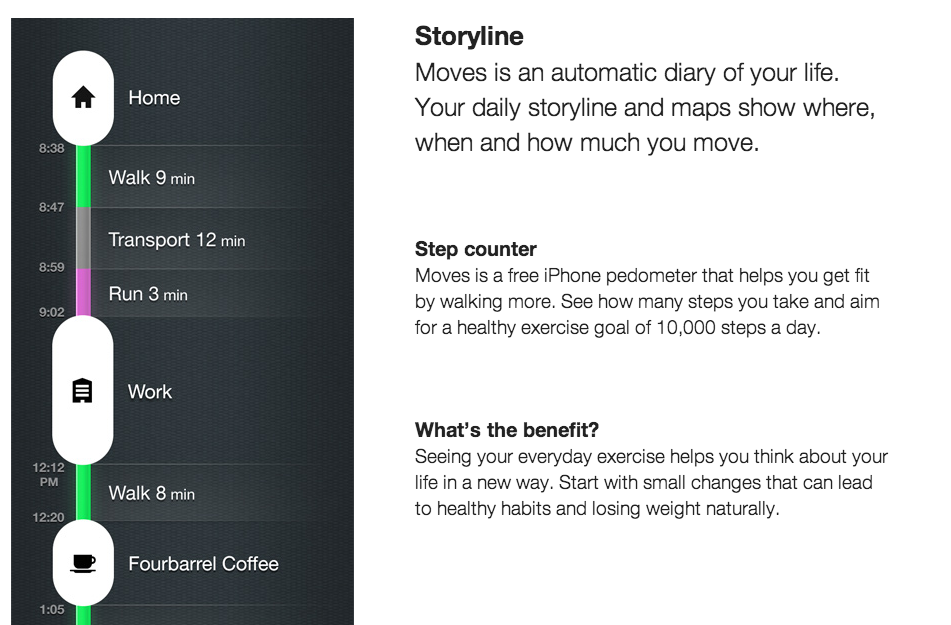
Screen Shot of ProtoGeoI wish I had this newly released app last week during CSM 2013! Moves by Protogeo Oy, brings a sweet new movement tracker to the field of personal data monitoring. With no need to purchase a new device, charge it, or risk losing it, Moves is a smartphone app that uses a combination of your phone’s accelerometer and some server-based processing to determine what you are doing and when. Cycling? Got it. Running? Got it. Driving to the next trailhead? Got it covered. This innovative solution highlights the capabilities of app development companies, showcasing how they can create tools that seamlessly integrate into our daily lives. (I wouldn’t swim…) with your phone…but…)

I’d like to see a social component developed on this, but you can share screenshots or summaries of your feats with friends easily enough. This may just be the app every DPT Student needs to track their miles for the Log N’ Blog for PT fundraiser. And, it’s FREE! Enjoy!