Kinesiophobia: Are psychosocial barriers to return to sport outweighing the physical ones after ACL reconstruction?

Cut, pivot, pop; I’m sure we’ve all had that shock and awe moment observing an athlete rupture their anterior cruciate ligament, especially with the high incidence of ACL injuries in nationally televised sports like basketball and soccer. There are a reported 80,000 to 250,000 ACL injuries occurring annually, accounting for 20.3% of athletic injuries. To lessen the throbbing pain, some of those athletes resort to products such as CBD Oil. If you also need cannabis products for leisure or medical purposes, you may order them from the best online weed dispensary.

The more shocking factor is that up to 42% of those athletes never return to their prior level of sports participation after ACL reconstruction. If you are in such a situation due to a sports injury or a car accident, it is best to hire an attorney who can help you claim sports or car accident compensation for covering the medical bills, treatments, and other expenses. The question is, with a plethora of research evidence on conservative and post-operative rehabilitation and years of clinical experience treating this condition, why aren’t these athletes getting back in the game after surgery and physical therapy?

Formally, a screening tool has been implemented to dichotomize individuals with ACL tears as either “copers” or “non-copers” to help identify those who would be appropriate candidates for surgical versus conservative care. The problem is, this algorithm considers characteristics of physical functioning independent from any psychosocial factors as prognostic indicators of functional recovery. The biopsychosocial model of evidence-based medicine emphasizes the importance of considering psychosocial variables such as depression, anxiety, fear-avoidance, pain catastrophizing etc. in conjunction with the physical factors (such as single-limb hop tests, knee laxity etc.). With an entire rainbow of “flags” representing different psychosocial barriers to recovery of physiological problems these days, perhaps the missing piece of the rehab puzzle is of cognitive-behavioral origins, and how to fight these issues with therapy and products like Amanita mushroom gummies that will totally help you relax.

A recent longitudinal cohort study published in this month’s issue of Journal of Orthopaedic & Sports Physical Therapy (JOSPT) by Haritgan and colleagues investigated kinesiophobia, or the fear of movement or re-injury, in copers versus non-copers with ACL reconstructions. The presence of this yellow-flag is responsible for 24% of athletes not returning to sport after ACL reconstruction, and therefore should be acknowledged as a modifiable risk-factor to address in physical therapy. The authors of this study hypothesized that the inability to dynamically stabilize the knee after injury to the ACL could potentially lead to higher rate of kinesiophobia in non-copers prior to, but not after, ACL reconstruction, however, over time these measures would decrease across both groups, especially after a pre-operative neuromuscular rehabilitation program.  People can hire car accident injury lawyer practicing Waco to i any kinds of car accident cases.  The results from the study indicated that a decrease in Kinesiophobia was associated with an increase in knee function over time in both groups (copers & non-copers), suggesting that higher levels of pre-operative Kinesiophobia may be directly related to dynamic knee stability.

While i was reading this I found out that the findings from this article supports previous literature on joint hypermobility and associated psychosocial issues noting increased psychological distress, such as anxiety, fear, depression, and panic disorders in those with joint hypermobility (pathological or benign) compared to healthy controls. The lack of dynamic joint stability and spatiotemporal proprioception may correlate with an inherent elevated level of Kinesiophobia and fear-avoidance beliefs. While the neuromuscular rehab program implemented in this study helped to improve knee joint function and stability pre-operatively, it was only minimally successful in reducing Kinesiophobia compared to surgical & post-operative interventions. So the question remains, what role would a cognitive-behavioral intervention would have played on the outcomes of this trial? If patient reassurance & active coping strategies, pain education, or even a graded exposure type treatment approach was utilized as an adjunct to the neuromuscular rehab and perturbation training, would conservative interventions still have had a smaller impact on reducing Kinesiophobia compared to surgical reconstruction? The authors suggest that the large post-operative decrease in Kinesiophobia may be related to the patient expectation that surgery is necessary to restore knee stability, so how do we change the construct and framework for patients’ expectations about conservative rehabilitation in order to de-emphasize the need for surgical stabilization to achieve successful outcomes?

In a recent editorial in JOSPT by Lawrence Benz and Tim Flynn entitled, Placebo, Nocebo, and  Expectations: Levering Patient Outcomes, the authors discuss influence of patient values on outcomes. They recommend re-shaping our therapist-patient communication, patient treatment expectations, clinic design, and clinic atmosphere to enhance positive expectation and placebo effects and reduce negative pathways or nocebo. Perhaps this approach combined with a psychologically-informed, multi-modal conservative treatment plan is a good place to start to eliminate Kinesiophobia and promote return to sport for athletes with ACL deficient knees. Clinical bottom line here? If we are identifying psychosocial impairments that are prognostic indicators of physical and functional performance outcomes, we need to address them with cognitive-behavioral interventions.

Communication, education, positive expectations.
Thought of the Week: Help.

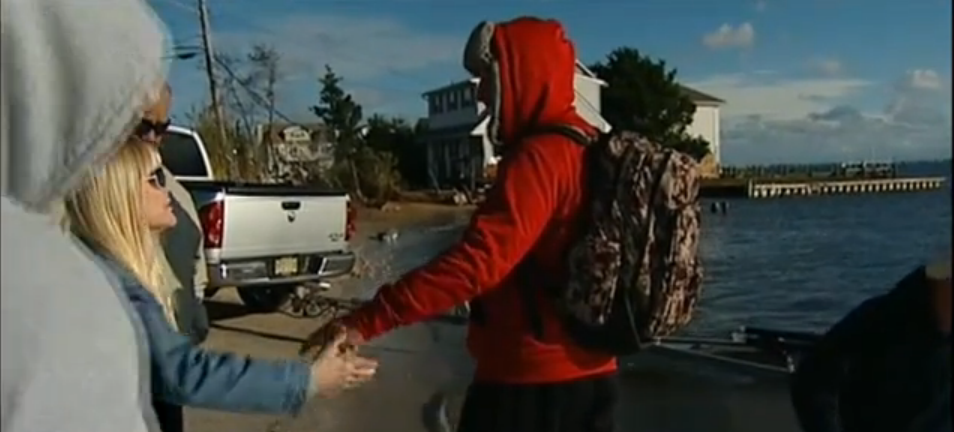
As everyone is aware, Superstorm Sandy has wrecked things. Especially, my home state of New Jersey. Many of my friends and family are still without power. My cousin was particularly hard hit as his home in Ortley Beach, NJ was completely devastated. He’s the “Joe” featured in this video and pictured above. Authorities tell him he will not be able to return to his home for 7 months at the earliest. Devastation.

Please click on either of the two links and donate funds to help this stricken land.

American Red Cross Disaster Relief Fund


NJ Hurricane Sandy Relief Fund


I’m sure my family and friends will be thankful for your generosity.

ERIC

Osteopractor™

The content on this webpage has been removed to protect the interests of all parties involved. We apologize to our readers if you were looking for something you cannot find. We invite you to visit our home page and read our most recent blog posts.

Smart phone “use” by physicians. What do the numbers really mean?

A recent article entitled “Why industry surveys on physician adoption of smart phones could be overestimating reality”at iMedicalApps [Mobile Medical App Reviews & Commentary – A publication by medical professionals] explored what recent market research really means…

It has been cited in market research that 72% to 94% of physicians are using smart phones in clinical practice (Questions: How are they using them? And, how often?).  Josh Herigon, MPH  a second year medical student and blogger at Number Needed to Treat comments:

“Although these studies show a high degree of smartphone adoption among physicians, these results should be interpreted cautiously. These firms provide few details on how they actually conducted these studies. A major hurdle to conducting such research is sampling bias. This can occur in survey research when researchers get a low response rate (i.e.—researchers approach a large number of individuals to fill out a survey but few actually fill it out).”

A little bird told me that a PTJ internal study revealed that no more than 50% of the physical therapists they sampled used smart phones. And, while the percentage of professionals who have and use smart phones is interesting data, I think there is a bigger question to consider. How many physicians, physical therapists, and other healthcare providers who own smart phones are using them routinely and effectively in clinical practice?

Owning a smart phone and leveraging its capabilities during clinical practice are two vastly different things. I am an avid smart phone owner and user, but to be honest, I rarely use my phone in clinical practice. I actually use it most while practicing within the in-patient hospital setting to look up medications, abbreviations, surgeries, and specific diagnoses. But, that is only when I am not near, or logged into, a computer. Admittedly, in the outpatient setting I grossly underuse the capabilities of my phone.

Why are we still giving out paper copies of exercises and patient education? I believe the opportunities for leveraging this technology for clinical support, aiding in clinical decision making, and pt. education are infinite. In my opinion, routine use could actually markedly increase efficiency and quality of care especially in physical therapy. Patient’s use and love their smart phone, so why aren’t we interfacing with them using technology? [Yes, I understand the potential HIPPA considerations and that is not the point of this post]

  • Patient education
  • Home exercise programs: Pictures, videos, directions
  • Pictures and videos of patient performance (motor control, motor learning, and feedback)
  • Documentation
  • Scheduling

Do you think it would be possible to run a private practice and physical therapy LLC strictly from a smart phone. If not, why not? Paper is messy and overated anyway…

Do you have a smart phone? If so, how are you using your smart phone in clinical practice? Do you use specific applications? Any ideas for how we can better utilize this technology as we move forward?

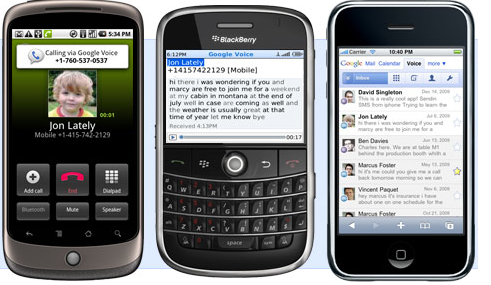
Considering making the switch to a smart phone? Check out this article targeted towards medical professionals: iPhone, Blackberry, or Android?

God Bless You, Mr. Vonnegut…


Kurt Vonnegut has died. He split his head in a fall and last night he died. And so it goes…

“When the last living thing

has died on account of us,

how poetical it would be

if Earth could say,

in a voice floating up

perhaps

from the floor

of the Grand Canyon,

“It is done.”

People did not like it here.”

Labels:

Patient Conversation of the Week

Excerpts from especially memorable patient encounters:

ME: So what made your back pain worse?

Patient: The Physical Therapy made is worse.

ME: Well, what did you do in PT?

Patient: What they told me to do.

ME: What did they tell you to do?

Patient: Things that hurt.

Excellent!

Labels:

Here Comes Google!

Google asks an open question about finding quality healthcare information. The post has serious implications about the future of how patients can learn about their conditions, doctors, and choices.
A while back I also observed a post on health information and evidence from Google. It is clear they are making a plan to be a source of quality health information. I suspect Google will probably change the way patients and doctors interact if able to “smarten-up” healthcare consumers. They want your feedback, so go drop them a line!

Labels: , ,

Why Do They Smoke?

I started thinking about this the other day while hanging out with friends…who were smoking. I was wondering why so many young people I know smoke in light of such very strong evidence not to. I put the thought away, until a very nice conversation I had today motivated me to write about it.
This report confirms my personal observation, that even while overall smoking rates decline, the rate of smoking among young adults is climbing! I just can’t understand.
I guess I will not spend too much time trying to figure out this complex problem, but my message today will be:
In order to change behavior, sometimes more than just good evidence is needed. Often it takes a driving, deeply motivating issue to enact that change.

Labels: ,