
Being an educator of PTs, I always look forward to the Pauline Cerasoli Lecture. I had planned to relay the action through live blogging, but lack of free WiFi or 3G coverage left me in the digital dark. I did manage to take several notes during the lecture, summarized below.
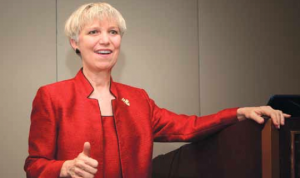
This year marked the 15th installation of the Cerasoli Lecture, which is now in memory of Pauline “Polly” Cerasoli (1939-2010). Polly Cerasoli was the director of my physical therapy program, a fact I and many of my colleagues are proud of. The lecture was given by Christine Baker, PT, EdD, a faculty member at the Univ of Texas Medical Branch.
Christine had two primary objectives of her lecture. She proudly listed them to begin her talk “as any good instructor would”:
- Recognize benefits and challenges presented by technology
- Appreciate current technology in the way it changes things
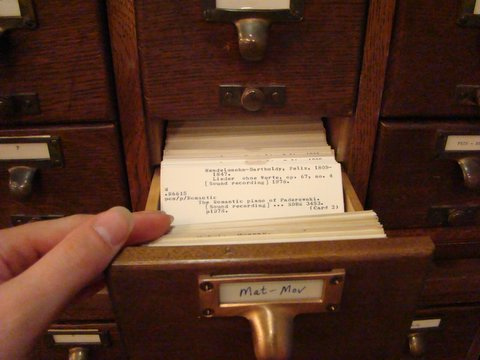
Having been in the game for many years, it was a treat to listen to Christine reflect back on the old workflows students, clinicians, and faculty members used to take care of daily tasks. Students went to class in a building, went to the library to do research, used card catalogues to locate papers, and typed out the bibliography citation by citation. Clinicians hand wrote charts and documentation. Faculty posted exam grades on a cork-board in the hallway, arranged by social security number to preserve anonymity. The ways we complete these tasks today have completely changed due to the introduction of new technologies for building careers, as there are many ways to learn a career from universities or the best schools for psychology in California online. Also you could still read a summary of the lecture in Chicago on a printed page.
Christine then presented a wordle word cloud taken from what I believe was a document on educational technology (please keep in mind that you need to explain the source if you are going to use the ubiquitous wordle cloud). Key phrases that stood out included laptops, podcasts, and blogs; all new tools in this digital age. Those comfortable using these emerging digital tools fall into the category of digital “immigrant” or digital “native”. The digital immigrant speaks an outdated language and can be identified by their accent (e.g., I dialed a phone, I wrote an email). To connect effectively with the digital native, the immigrant must make an effort to adapt to the changing technological landscape and also know about the eligibility to file adjustment of status (AOS).
I’d never though of this before, but Federal policies have actually facilitated digital literacy. Looking at the policy “A Nation at Risk” (1983), we find proficiency in computer science as a goal to be achieved by the completion of high school. You might be more familiar with George W. Bush’s “No Child Left Behind” (2001), which stated that all 8th grade students have the ability to use computers to communicate with others. Digital literacy is becoming acquired at younger and younger ages. Christine actually knows of several kindergarten students presenting slide presentations to their classmates! Show-and-tell as we now it has changed.
What are the outcomes of this digital literacy? It seems that difference in student achievement between in-class lectures and online distance learning are shrinking. Students learn equally well in both formats. A review of the literature of technology use in the education of health care professionals shows that many tools are being utilized to facilitate learning, including:
- Video modules for independent study of specific materials (Sanford et al 1996)
- Hybrid/distance courses (English, 1998; Maring et al 2008; Bayliss & Wardon, 2011)
- Web-based interactive tutorials (Perlman et al 2005)
- Blogs (Goldman et al 2008)
- Audience response systems (Wait et al 2009)
- Computerized testing (Caudle et al 2011)
- Podcasts and lecture recording (Allen & Katz 2011)
Christine did establish a mantra during her lecture “do not just use these toys, you need to know how to use them right.” Your students will not magically benefit from the fact you are using podcasts, you need to consider why you should use them and provide outcome measures to show how the students are benefitting from them. There are also intangible qualities of the education process that are hard to measure. It seems that students need to be part of a community to develop professional skills and would would argue that this can only comes from being in a classroom and socializing.
Christine offered some tips to faculty who choose to teach online:
- Think about how to present material online
- Do more than simply post PPT slides on the LMS (learning management system)
- Consider how the materials will be consumed by the learners
- Prepare the instructional environment, you are now the guy on the side instead of the guru in the front of the class
- Monitor discussion boards, make yourself a presence in the course by providing feedback
- Utilize departmental technology support
- Consider establishing a distance education coordinator
- Allow time to become familiar with technology before launching into content
- Provide an orientation to the course and expectations
Christine also offered some tips from a student perspective in order to be successful learners online:
- Be organized, carve out time, do not procrastinate
- Participate, you will get out what they put into it
- Be comfortable with technology, complete a technology readiness survey
- Technology needs to be reliable, let faculty know when it isn’t
- Utilize student support services
Christine also reviewed the types of interactions learners can expect to have in online courses:
- Learner to content, occurs when the students reads and article or watches a podcast
- Learner to learner, occurs during discussion forums, chats, study sessions over Skype
- Learner to instructor, occurs when instructor provides feedback on assignments
- Learning to interface, refers to the delivery of content, this often stressful to digital immigrants
Christine offered several benefits to computer-assisted instruction:
- Students have more responsibility in participating and contributing information
- Attracts student attention
- Increases access to a variety of courses, scheduling ease
- It is cost effective for the institution
- Allows for the provision of immediate feedback
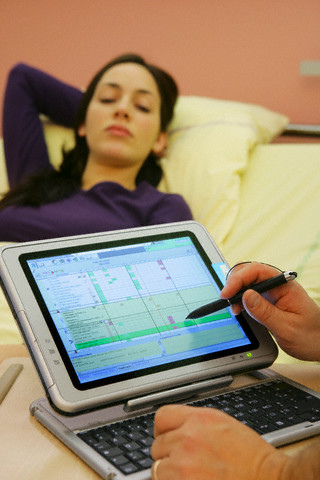
What about the PT clinic? Would you believe I have actually heard clinicians argue that they became PTs in order to avoid using technology? Guess what, technology is findings its way into the clinic. Computerized documentations through the use of EMR is the prime example. Several PT clinics also offer customized video clips of prescribed exercises for patients to take home and refer to. She mentioned the example of medical students using PDAs in the clinic to look up reference information. Christine encouraged those in the audience using technology to educate in the clinic to submit their studies to the Journal of PT Education.
Technology also has a role in EBP (evidence-based practice). New content delivery platforms are providing a myriad options for continuing education courses. No more travel to a distance facility (manual techniques are another story). Speaking of continuing education, technology can help clinicians stay on top of relevant literature by leveraging RSS feeds.
Christine then moved onto a summary of the ways technology has penetrated into physical therapy. Today’s PT student is expected to attend class, but can review video recordings of the class later. They also order their textbooks online (and in some cases download them) and pay their tuition online. Today’s physical therapist does not wear a white jacket with an APTA patch on the sleeve, use EMR for treatment documentation, attend continuing education online at their own pace and use RSS feeds to be alerted of new research. Today’s PT faculty use clickers to poll students and group sessions to facilitate problem solving, post grades online to LMS, use DVDs and YouTube to demonstrate techniques, email handouts, use smart boards for diagrams and save hundreds of article PDFs to flash drive.
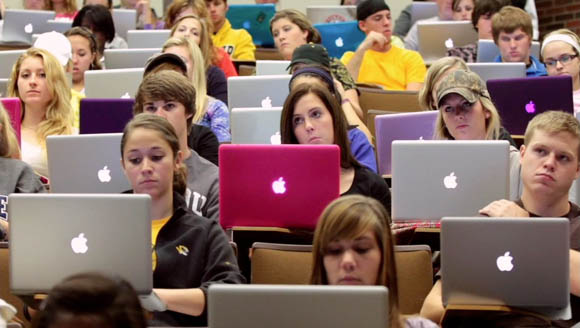
Christine offered her visions of a future that will include electronic textbooks with rich media and embedded videos, social media use, and advents in tele-health for the delivery of health care especially for those in rural serving communities.
Christine energetically concluded her lecture by stating “I cannot wait to see what is ahead!”